


Espace Killy, home to French Alpine powerhouses Tignes and Val d’Isère, is often regarded as one of the best locations for property investment, promising not only world-class ski trips but also long-term capital resilience and strong rental income. We join Charlie Williams, Alpine Specialist and Head of Partner Accounts at Athena Advisers, to discuss what sets property in Espace Killy apart.
When buying a property in the Alps, long-term snow reliability is an important factor. How does Espace Killy compare?
Charlie: We are often asked about long-term snow reliability in the Alps and whether Alpine property remains a sound investment in the context of climate change. These are sensible questions. Importantly, however, this is not a story about lower resorts becoming defunct — there is still snow, demand and liquidity across much of the Alps, and we continue to see strong interest and transactions in many lower and mid-altitude resorts.
What is happening is a gradual reweighting of demand, with buyers, renters and investors placing increasing value on altitude, snow reliability and long-term resilience. Within that context, Espace Killy stands out as one of the clearest beneficiaries.
Espace Killy sits firmly in one of the safest altitude bands in the Alps. Val d’Isère’s village is at 1,850m, Tignes ranges from around 1,550m up to 2,100m, and the ski area reaches approximately 3,450m on the Grande Motte glacier.
Studies from Météo-France and other European climate bodies consistently show that resorts above roughly 1,800 m retain reliable snow cover well beyond 2050, even under more pessimistic climate scenarios. Large parts of Espace Killy sit comfortably above that threshold, and crucially, the ski area as a whole functions at altitude even when conditions are more variable lower down. This places Val d’Isère and Tignes firmly in that top tier, alongside resorts such as Zermatt, Verbier and Courchevel 1850.
Beyond altitude, are there other factors supporting snow reliability in the area?
Charlie: Espace Killy benefits from a specific and well-documented meteorological phenomenon. Positioned on the snow-heavy side of the Alpine foehn system, the area frequently receives snowfall when moist air rises from Italy and cools rapidly as it is pushed over surrounding peaks.
This “retour d’Est” effect has been recorded for decades and is one of the reasons Val d’Isère and Tignes consistently build such deep early-season bases and maintain strong snow cover through to April — even in winters when other areas struggle. Snow reliability here is not accidental, and it is not solely altitude-driven.
Terrain orientation matters too. Much of the domain is north-facing, preserving snow quality far longer through the season. The area also benefits from strong early-season snowfall, allowing it to build a deep base in November and early December when some lower resorts are still waiting for consistent cover.
In other words, snow reliability here isn’t accidental, and it isn’t driven by altitude alone.
We are seeing each year that the summer season is becoming increasingly important, is Espace Killy diversifying and improving its summer offering?
Charlie: That’s right, summer demand in the mountains has grown sharply since COVID, with families increasingly choosing altitude over coastal destinations as summer temperatures rise.
Megève is a useful reference point: around 75% of visitors there never buy a ski pass, yet the resort remains busy year-round. While not directly comparable, Val d’Isère and Tignes are clearly moving in the same direction, investing heavily in summer infrastructure, events and activities such as hiking, MTB and wellness facilities.
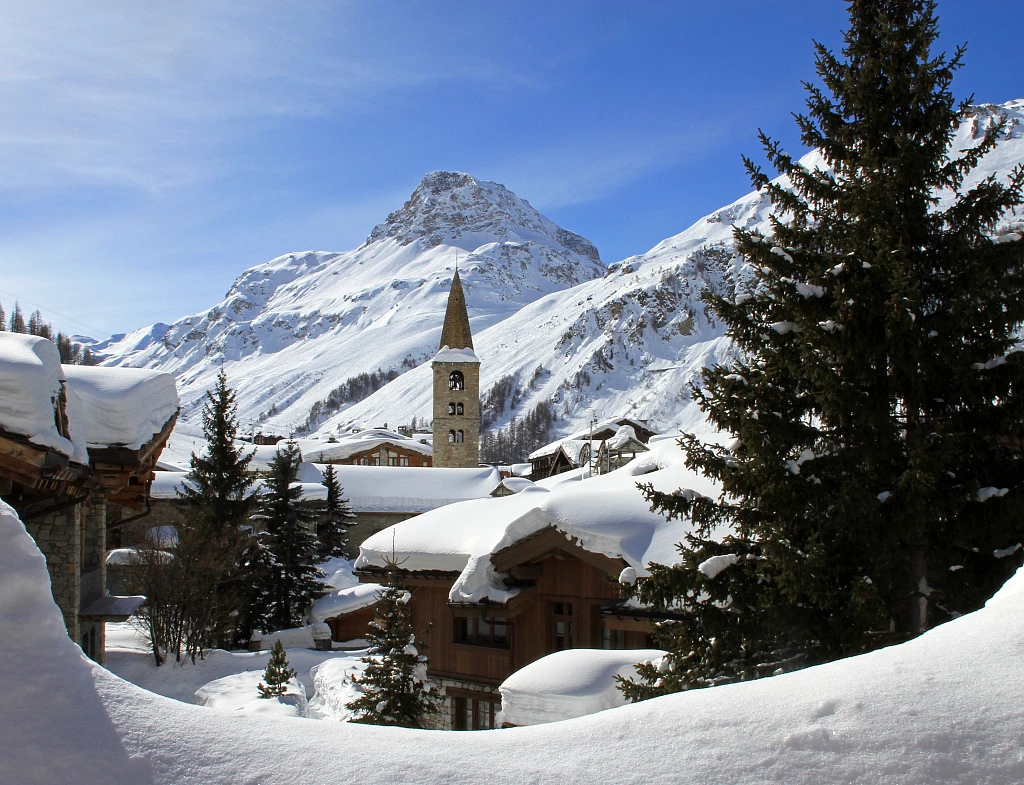
Zooming in now on the property market itself in this region, could you give us a quick overview of the dynamics defining Espace Killy?
Charlie: Property supply across the domain is extremely constrained. Central land is largely built out, planning rules are tight, and only a handful of new projects in Espace Killy come forward. Properties in prime locations rarely change hands and are often passed through generations. A significant proportion of resales happen quietly, off-market, as owners value discretion and long-term ownership.
This lack of supply meets enduring demand, setting Espace Killy up for strong capital appreciation. Today, prices per square metre in Espace Killy — particularly in Val d’Isère — are broadly on par with Courchevel 1850. Looking at the data published by Adnov, over the past two decades, property prices in Val d’Isere have, on average, grown more than 200% over the past few decades.
What are you seeing on the rental side?
Charlie: Rental demand is very strong and increasingly international. Guests return year after year because Espace Killy delivers what matters most: reliable snow, scale, infrastructure, and an increasingly sophisticated lifestyle offering, both in resort and on the mountain.
Rental inflation has been particularly notable in recent years, driven by:
- gradual displacement from lower resorts,
- international guests prioritising altitude security,
- the knock-on effect of Val d’Isère’s price growth pushing demand into Tignes.
Despite comparable property prices, rental prices in Courchevel 1850 remain materially higher than those achieved in Val d’Isère and Tignes. This creates clear rental headroom in Espace Killy. Capital values have already adjusted; rental income is still catching up.
As a result, entry yields today can appear modest compared to secondary markets, but this reflects where the market sits in its cycle, not a lack of demand. Historically, this is exactly how the strongest long-term Alpine investments behave: prices move first, rents follow, and yields improve through rental inflation rather than price correction.
So if you had to distil it down, why does Espace Killy stand out as a long-term investment?
Charlie: It sits in one of the safest altitude bands in the Alps, demand continues to rise, supply remains extremely limited and rental performance still has room to grow. For buyers taking a medium- to long-term view, ownership here offers both lifestyle value today and a compelling case for improving income and capital protection over time.


